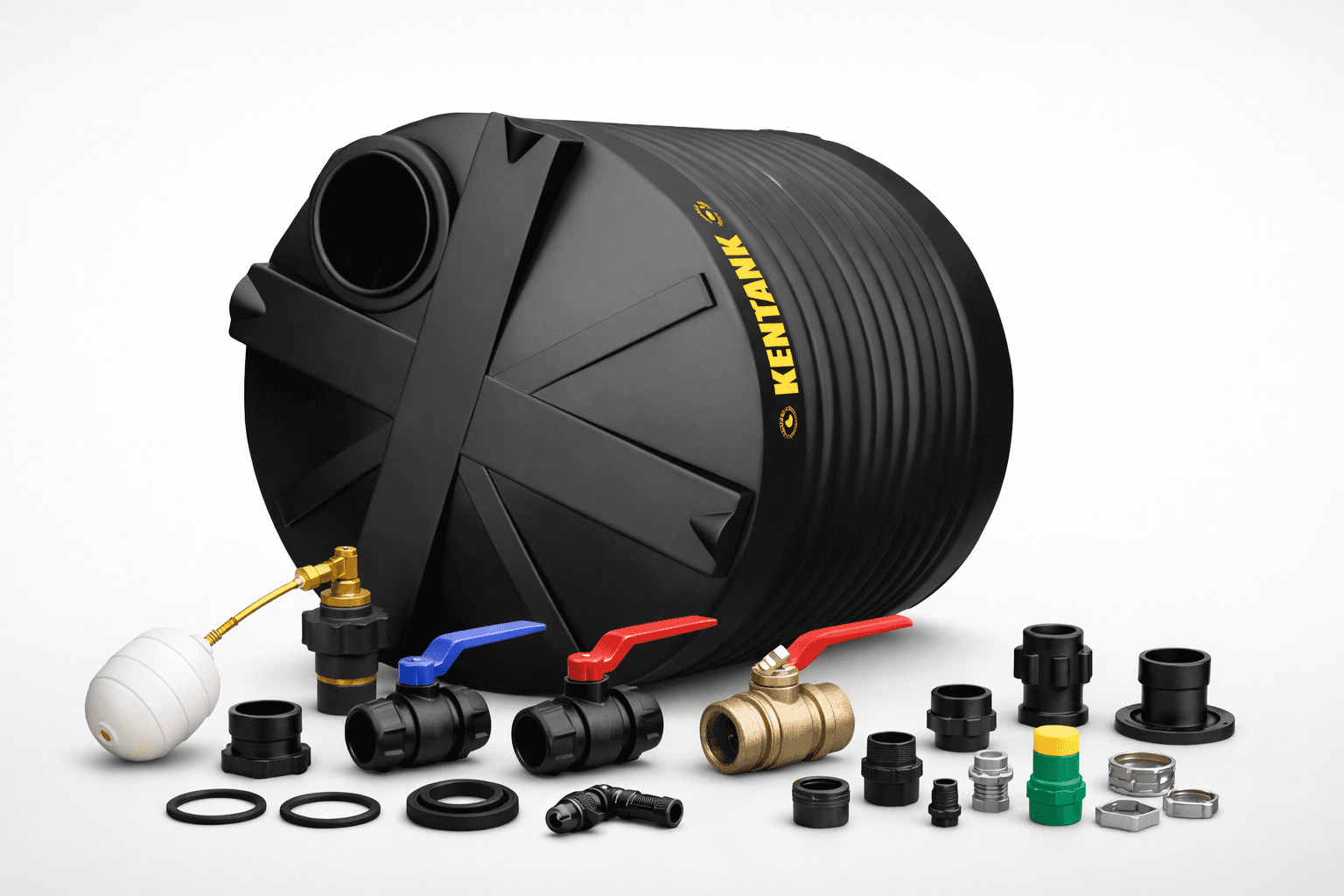
You've invested in a water tank, a wise decision for any Kenyan household or business facing inconsistent water supply. But here's a secret many overlook: a water tank alone isn't a complete water storage system. Just like a car needs more than just an engine to run safely, your water tank relies on a network of essential fittings and accessories to function efficiently, prevent waste, and ensure the quality of your stored water.
At Restore Services, we often see tanks that aren't living up to their full potential simply because the right accessories weren't chosen or installed correctly. These "unsung heroes" of your water storage system are what truly make the difference between a basic container and a reliable, long-lasting solution. Let's explore the must-have water tank fittings that every Kenyan home should consider.
The Unsung Heroes: Essential Water Tank Fittings You Need
1. Float Valves: Your Tank's Automatic Watchman
Imagine never having to worry about your water tank overflowing or running dry. That's the magic of a float valve. Connected to your water inlet, this clever device automatically shuts off the water supply when the tank is full and reopens it when the water level drops. It's an indispensable component, especially for homes relying on municipal water or boreholes with inconsistent pressure.
- How it Works: A buoyant float rises and falls with the water level, mechanically opening or closing a valve.
- Types in Kenya: You'll find plastic (PVC) and brass float valves. Plastic options are generally more affordable (starting from KES 300-800) and corrosion-resistant, while brass valves (KES 800-2,500+) offer greater durability and can withstand higher pressures, making them suitable for commercial setups or areas with strong water flow.
- Why it Matters: Prevents costly water wastage from overflows, protects your property from water damage, and ensures your tank never runs completely empty, safeguarding your pump from dry-running.
2. Ball Valves & Gate Valves: Mastering Water Flow Control
These are your primary control points for managing water in and out of your tank. A sturdy valve at your tank's outlet is non-negotiable for regulating water distribution to your home or garden, and for isolating the tank during maintenance or repairs.
- Ball Valves: Known for their quick shut-off (a quarter turn) and excellent sealing capabilities. They are ideal for main shut-off points. Prices vary significantly by size and material (PVC, brass, stainless steel), ranging from KES 200 for smaller PVC valves to KES 3,000+ for larger brass ones.
- Gate Valves: Operate by lifting a 'gate' out of the fluid path. They offer less resistance to flow when fully open but are slower to operate and not ideal for throttling (partially opening) flow. They are often used in situations where the valve is either fully open or fully closed for long periods.
- Restore Services Tip: Always choose valves appropriate for the pipe size and water pressure. Undersized or low-quality valves can restrict flow or fail prematurely. If you're unsure which type or size is best for your system, our experts at Restore Services can provide tailored advice and professional installation.
3. Tank Connectors & Outlets: The Leak-Proof Link
These fittings connect your tank to your plumbing system. A poorly installed or low-quality tank connector is a common source of frustrating leaks and water loss.
- Material Matters: Most common are PVC and brass. Brass connectors (KES 500-2,000+) offer superior strength and longevity, especially for larger tanks or higher pressure systems. PVC connectors (KES 150-700) are more budget-friendly and corrosion-resistant.
- Proper Sizing: Ensure the connector matches the outlet size of your tank and the diameter of your plumbing pipes. Common sizes for home tanks range from 1 inch to 2 inches.
- Installation: This is where precision counts. Correct threading, use of appropriate sealants (like PTFE tape or pipe dope), and proper tightening are paramount to prevent drips and leaks.
4. Overflow Pipes: Preventing Spills and Safeguarding Your Property
An overflow pipe is often overlooked until it's too late. When your tank fills up, perhaps due to a faulty float valve or heavy rainfall during a rainwater harvesting cycle, the overflow pipe diverts excess water safely away from your tank and property.
- Why It's Essential: Prevents water from spilling over the tank's top, which can lead to foundation damage, erosion, or simply wasted water.
- Proper Routing: The overflow pipe should be directed to a drain, a garden area, or another collection point, ensuring it doesn't create puddles or undermine structures. Never direct it back into your primary water source.
- Mesh Screen: Consider adding a fine mesh screen at the end of your overflow pipe to prevent insects, rodents, and debris from entering your tank.
5. Tank Level Indicators: Know Your Water Status at a Glance
Ever wondered how much water is actually left in your tank without climbing a ladder? Tank level indicators provide a convenient visual or electronic reading of your water level.
- Simple Float Indicators: These are mechanical systems with a weighted float inside the tank connected to an external indicator (often a red or black marker) that moves up and down a visible scale. They are affordable (KES 1,000-3,000) and reliable.
- Electronic Indicators: More advanced systems use sensors to transmit water level data to a display unit, or even to your smartphone. While pricier (KES 5,000+), they offer greater convenience and accuracy, especially for large or multiple tanks.
- Benefit: Helps you manage your water consumption, anticipate shortages, and schedule refills more effectively, especially during dry seasons in Kenya.
6. Water Tank Filters: For Cleaner, Safer Stored Water
While not always a default "fitting," filters are increasingly important, especially for rainwater harvesting systems or if your water source has sediment. They protect your plumbing and ensure cleaner water for consumption.
- Sediment Filters: Installed at the inlet, these remove sand, silt, and other particulate matter, preventing them from accumulating in your tank or clogging your plumbing.
- Activated Carbon Filters: Can be used post-tank to improve water taste and remove chlorine or certain organic compounds.
- First-Flush Diverters: For rainwater harvesting, these divert the initial, dirtiest runoff from your roof before it enters your tank, significantly improving water quality.
- Restore Services Recommendation: For optimal water quality, especially for drinking, consider a multi-stage filtration system. We can assess your water source and recommend the best filtration solutions for your specific needs, ensuring your family's health.
Why Quality Fittings Matter: More Than Just an Expense
It's tempting to cut corners on water tank accessories to save a few shillings. However, this often leads to greater costs down the line. Cheap fittings can:
- Fail Quickly: Leading to leaks, water loss, and the need for frequent replacements.
- Compromise Water Quality: Inferior materials can leach chemicals into your water or provide entry points for contaminants.
- Cause System Malfunctions: A faulty float valve can lead to continuous pump operation, increasing electricity bills and shortening pump life.
Investing in quality, KEBS-approved fittings ensures durability, reliability, and peace of mind. Think of it as protecting your primary investment – the water tank itself.
DIY vs. Professional Installation & Maintenance of Fittings
While some basic fittings like simple ball valves might seem easy to install, the precise nature of water plumbing means that mistakes can be costly. Incorrectly threaded connections, insufficient sealing, or improper sizing can lead to persistent leaks, reduced water pressure, or even damage to your tank.
For critical components like float valves, tank connectors, and filtration systems, we always recommend professional installation. Our certified technicians at Restore Services have the expertise and specialized tools to ensure every fitting is installed correctly, tested thoroughly, and optimized for your specific water system and Kenyan conditions. We also offer routine maintenance checks to ensure all your fittings are in top working order, preventing minor issues from becoming major problems.
Kenya-Specific Considerations for Your Water Tank Accessories
Our unique environment in Kenya presents specific challenges and opportunities when it comes to water storage:
- Dust and Debris: During dry seasons, dust can accumulate on tank surfaces and potentially enter through poorly screened openings. Filters and proper screening on overflow pipes are essential.
- Water Pressure Variability: Some areas experience very low or fluctuating water pressure. Choosing the right float valve that can handle these variations is important.
- UV Exposure: Many tanks are exposed to intense sunlight. While the tank itself might be UV-stabilized, ensure any exposed plastic fittings are also designed to withstand UV degradation.
- Local Sourcing & Brands: Kenya has a good supply of local and imported fittings. Always opt for reputable brands and suppliers. Don't hesitate to ask for quality certifications.
Frequently Asked Questions About Water Tank Fittings in Kenya
- Q: How often should I inspect my water tank fittings?
- A: We recommend a visual inspection every 3-6 months. Check for leaks, corrosion, cracks, or signs of wear on valves and pipes. Listen for unusual noises from float valves. For critical systems, annual professional checks are advisable.
- Q: Can I install a float valve myself?
- A: While it's possible for a DIY enthusiast, precise installation is key to preventing leaks and ensuring proper function. If you're not confident with plumbing, it's best to hire a professional. A small error can lead to significant water loss.
- Q: What’s the average lifespan of a water tank fitting?
- A: This varies greatly by material and quality. High-quality brass valves can last 10-20 years or more, while plastic components might need replacement every 3-7 years, especially if exposed to harsh UV or high pressure. Regular maintenance extends their life.
- Q: Are there smart water tank accessories available in Kenya?
- A: Yes, electronic tank level indicators and even smart pump controllers are becoming more available. These can integrate with smart home systems, allowing you to monitor water levels and pump activity remotely via your smartphone. They offer greater convenience and control, though at a higher initial cost.
Conclusion
Your water tank is a significant asset, providing essential water security for your home or business in Kenya. But its true efficiency, longevity, and the quality of the water it holds are heavily dependent on the quality and proper installation of its fittings and accessories. Don't let these "small" components be an afterthought.
By investing in the right float valves, robust connectors, effective overflow systems, and even smart level indicators and filters, you're not just buying parts; you're building a resilient, efficient, and worry-free water storage solution. At Restore Services, we are passionate about helping Kenyans optimize their water systems. Whether you need advice on selecting the best fittings, professional installation, or routine maintenance and repairs, we are your trusted partner.
Ready to enhance your water storage system? Contact Restore Services today for a consultation, and let us help you build a water system that truly works for you.