Is Your Stored Water Safe? Understanding Water Quality in Kenyan Tanks
Across Kenya, water tanks help households, businesses, schools, and institutions cope with interruptions in supply. But storage does not automatically mean safety. Once water is collected and stored, its quality can decline if the tank is dirty, poorly sealed, exposed to contamination, or handled unsafely. That is why safe storage matters just as much as access to water.
At Restore Services, we believe informed tank owners make better decisions. Understanding the risks of stored water and how to prevent them is one of the best ways to protect your household or business.
How Water Storage Can Affect Water Quality
Stored water can remain safe, but only when the tank and the way it is used support good hygiene. Common risks include:
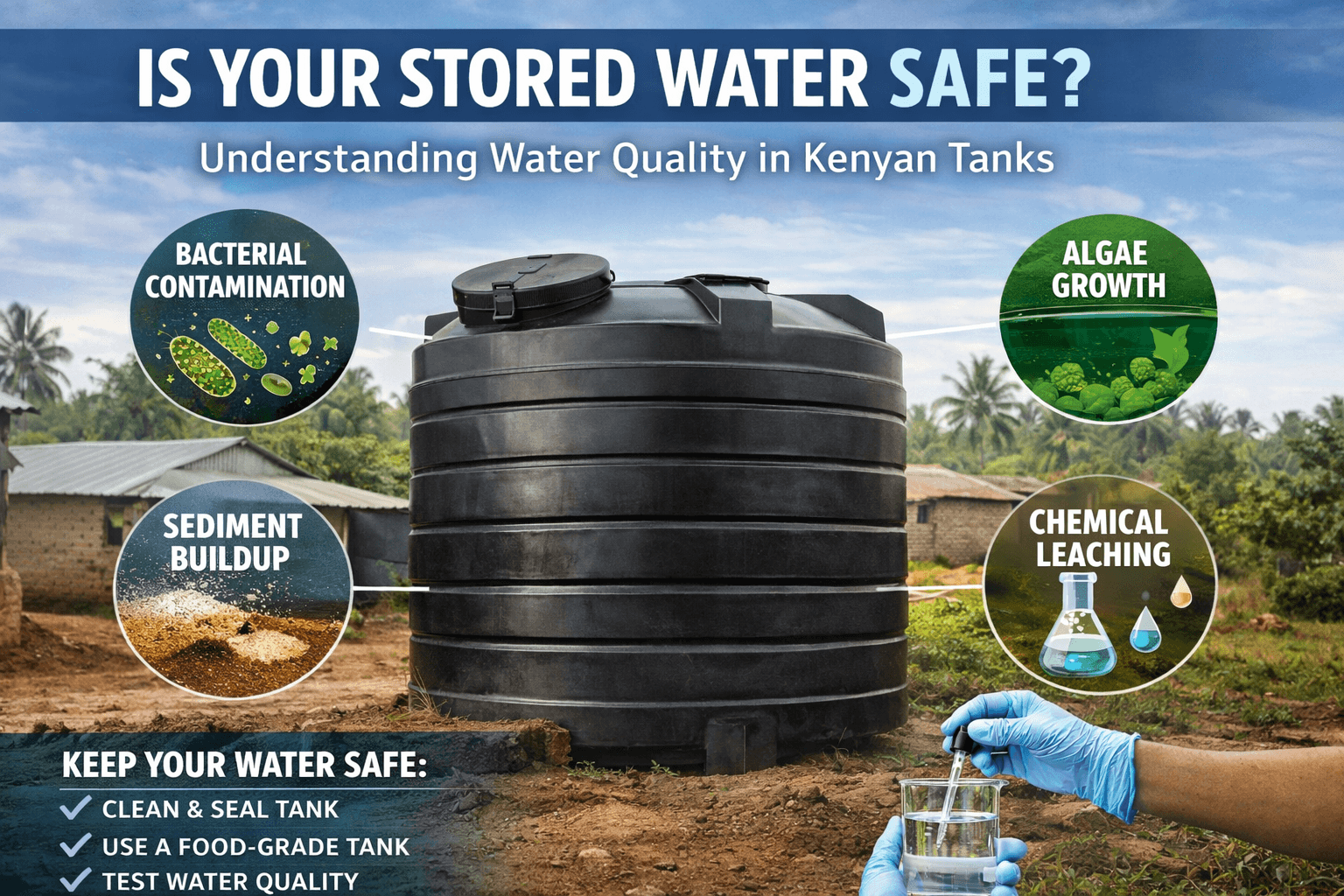
- Microbial contamination: Water can become contaminated by bacteria and other germs when tanks are not cleaned, when lids are left open, or when dirty hands, containers, insects, dust, or animal waste enter the system.
- Sediment buildup: Over time, silt and debris can settle at the bottom of the tank. This affects water appearance and can create conditions that make cleaning and disinfection less effective.
- Algae growth: Algae are more likely to develop when light enters the tank and the water contains nutrients from dirt, debris, or other contamination. This can affect water colour, smell, and taste.
- Material related concerns: Water should only be stored in tanks intended for potable water use. Using unsuitable or poor quality containers may increase the risk of contamination or chemical transfer into stored water.
Preventing Algae Growth: Keeping Your Water Clear
Algae growth is usually linked to light entering the tank together with contamination from dirt or organic matter. To reduce the risk:
- Choose an opaque tank: Opaque or UV resistant tanks help reduce light penetration, which limits algae growth.
- Keep the tank closed: A tight fitting lid helps block light and reduces the entry of dust, insects, and other contaminants.
- Clean the tank regularly: Periodic cleaning removes slime, sediment, and organic matter that can support algae and microbial growth.
- Check overflows and vents: Openings should be screened or protected so pests and debris do not enter the tank.
Contamination Risks: What to Watch Out For
Even a good quality tank can deliver unsafe water if the system is not maintained properly. Watch out for:
- Loose or damaged lids: Tanks should remain properly covered to reduce faecal contamination, pests, and debris.
- Cracks, leaks, and damaged fittings: Any opening in the tank or pipework can allow contamination into stored water.
- Dirty inlets, outlets, and pipes: Water quality can be affected if the connected fittings or hoses are unhygienic.
- Unsafe handling: Scooping water with unclean containers or hands increases the risk of contamination. Where possible, use a tap, outlet, or controlled discharge point rather than dipping items into the tank.
Testing Your Stored Water
If you use tank water for drinking, cooking, or food preparation, testing is the most reliable way to confirm safety. Water testing can help assess:
- Microbiological quality: Tests for indicators such as E. coli can show whether faecal contamination may be present.
- Physical quality: Parameters such as turbidity, colour, and sediment can reveal whether the tank needs cleaning or the source water needs treatment.
- Chemical quality: Where there are concerns about materials, source contamination, or local conditions, laboratory analysis can help identify possible chemical issues.
Testing is especially useful if your water changes in taste, smell, or appearance, or if the tank stores rainwater, borehole water, or water from an uncertain source.
Choosing the Right Tank for Better Water Quality
The right tank can help reduce risk, but only if it is suitable for potable water storage and installed correctly. When buying a tank in Kenya, consider the following:
- Potable water suitability: Choose a tank specifically intended for drinking water storage and check for relevant quality compliance markings, including KEBS certification where applicable.
- Opaque construction: Tanks that reduce light penetration help control algae growth.
- Secure lid and protected openings: The tank should close tightly, and vents or overflows should be designed to keep out insects and debris.
- Appropriate sizing: A tank should match your water demand. Oversized tanks may hold water for too long, especially where usage is low, increasing stagnation and maintenance concerns. Need help choosing capacity? Our Restore Services tank size calculator can help you estimate the right size.
When to Call the Professionals
Some water quality issues can be prevented with routine checks, but others need expert attention. Professional help is recommended when:
- The tank has visible sediment, slime, or bad odour: A proper tank cleaning can remove buildup and improve hygiene.
- The tank has cracks, leaks, or damaged fittings: Poor repairs can fail quickly or compromise water safety. A professional assessment helps determine whether repair or replacement is the better option.
- You are installing a new tank: Correct installation helps protect water quality by ensuring the tank is stable, sealed properly, and connected with suitable fittings.
- You are unsure whether the water is safe: If the stored water may be contaminated, it may need treatment such as boiling or chlorination before use, depending on the source and intended purpose.
The Bottom Line: Safe Storage Protects Health
Water tanks are essential in many parts of Kenya, but safe storage requires more than just buying a tank. Clean tanks, secure lids, proper fittings, protected openings, safe handling, and periodic maintenance all help protect water quality. If you use stored water for drinking or food preparation, regular inspection and occasional testing are wise steps.
At Restore Services, we support customers with professional tank cleaning, repairs, installation, and guidance on choosing suitable water storage solutions. Safe water starts with the right system and proper maintenance.