Underground vs Elevated Water Tanks in Kenya: Which Is Best for Your Home?
In many parts of Kenya, reliable access to water is still a challenge. Some homes receive piped water daily, while others deal with low pressure, rationing, or irregular supply. That is why having the right water storage system is no longer just a convenience. It is an important part of keeping your home running smoothly.
When choosing a storage solution, many homeowners compare underground water tanks and elevated water tanks. Both options can work well, but the best choice depends on your space, budget, water pressure needs, and long term maintenance plans. If you are still shopping for the right tank before deciding on installation style, you can first explore our water tank sales page to compare available options.
Understanding Your Water Storage Needs
Before choosing between an underground or elevated tank, ask yourself these practical questions:
- What is my main water source: municipal supply, borehole, rainwater harvesting, or water bowser?
- How much water does my household use daily or weekly?
- Do I need stronger water pressure inside the house?
- How much space do I have above ground and below ground?
- What is my budget for purchase, installation, and future maintenance?
- Will I need easier access for cleaning or repairs later?
These questions help narrow the choice quickly. In many Kenyan homes, water pressure and ease of maintenance are usually the biggest decision factors.
Underground Water Tanks
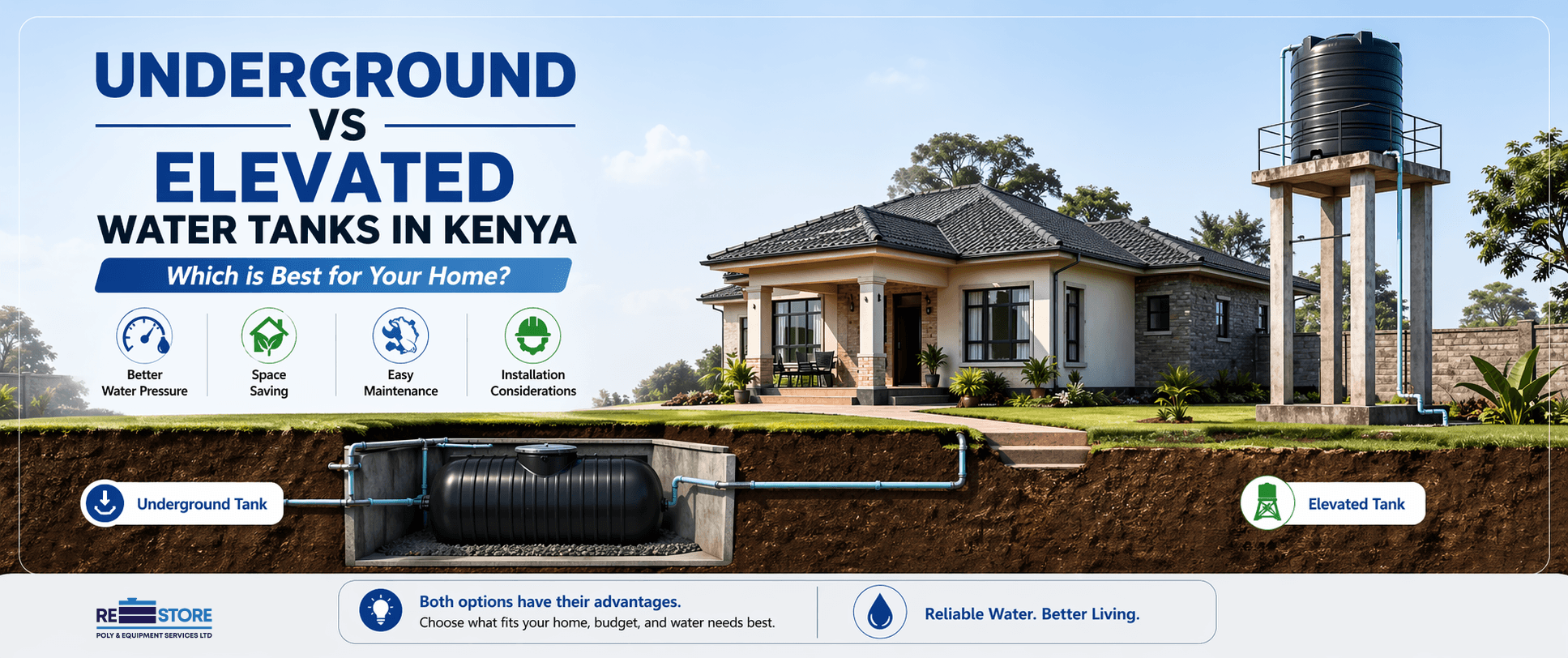
Underground tanks are installed below ground level and are usually chosen when above ground space is limited or when the homeowner wants a cleaner, less visible setup. These tanks are commonly made from reinforced concrete or specially rated heavy duty polyethylene designed for underground installation.
Advantages of Underground Tanks
- They save space: This is one of the biggest advantages. The tank stays out of sight and does not occupy visible compound space.
- Better aesthetics: Since the tank is hidden, it does not affect the appearance of the home or compound.
- More stable water temperature: Being below ground can help reduce extreme heating from direct sun.
- Less direct UV exposure: This helps protect the tank body from prolonged sunlight exposure.
Disadvantages of Underground Tanks
- More complex installation: Excavation, proper bedding, drainage, and backfilling all increase installation cost and risk if done poorly.
- Pump usually required: Underground tanks do not provide gravity fed pressure on their own, so most homes need a pump system.
- Harder to inspect and clean: Access planning is very important because cleaning and repair are more difficult once the tank is buried.
- Risk of contamination if poorly installed: Improper sealing or drainage can allow surface water or contaminants to enter.
If you are considering an underground setup and want professional help with safe placement, base preparation, and connection work, see our water tank installation services.
Elevated Water Tanks
Elevated tanks are installed above ground on a stand, tower, platform, or rooftop structure. This is one of the most common water storage solutions in Kenya because it helps improve water pressure through gravity.
Advantages of Elevated Tanks
- Gravity fed water pressure: This is often the biggest benefit. Water can flow to taps, toilets, and showers without relying fully on a pump.
- Easier maintenance access: Inspection, cleaning, and repairs are generally simpler compared to buried tanks.
- Simpler installation: In many cases, installation is more straightforward than underground systems, provided the stand is properly built.
- Lower contamination risk from ground conditions: Since the tank is above ground, it is less exposed to seepage from soil or surface runoff.
Disadvantages of Elevated Tanks
- Visible structure: Some homeowners do not like the look of a raised tank and stand in the compound.
- Requires structural support: A full tank is extremely heavy, so the stand or slab must be designed properly.
- Exposed to weather: Heat, sunlight, and wind affect above ground tanks more directly.
- Needs enough space and safe placement: The installation area must be level, secure, and accessible.
If strong household water pressure is one of your main priorities, an elevated tank is often the more practical option for a home in Kenya.
Which Option Is Better for Kenyan Homes?
For many homes in Kenya, elevated tanks are often the more practical choice because they help improve pressure naturally and are easier to maintain. Underground tanks are still an excellent option where appearance, space saving, or compound layout matter more, but they usually require more planning and a pump based system.
This is especially important in areas where supply is intermittent or pressure is weak. Your site already emphasizes tank installation, emergency support, and water tank sales across Kenya, which makes internal linking between these decision based blog articles and your service pages valuable for both users and search engines. :contentReference[oaicite:2]{index=2}
Key Factors to Compare Before Choosing
1. Water Pressure
If you want natural pressure without depending too much on electricity, an elevated tank usually makes more sense. Gravity can do most of the work.
2. Available Space
If your plot is tight and you want to preserve outdoor space, an underground tank may be more suitable.
3. Installation Budget
Underground tanks often cost more to install because excavation and structural preparation are involved. Elevated tanks may need a stand, but the work is usually less invasive.
4. Maintenance Access
Elevated tanks are easier to inspect and clean. If long term convenience matters, that is a major advantage.
5. Appearance
If you want a cleaner look with less visible equipment in the compound, underground tanks have an edge.
Underground Tank vs Elevated Tank: Quick Comparison
- Best for saving space: Underground tank
- Best for water pressure: Elevated tank
- Best for easier maintenance: Elevated tank
- Best for aesthetics: Underground tank
- Best for lower installation complexity: Elevated tank
- Best where pump use is acceptable: Underground tank
What About Cleaning and Repairs?
Whichever option you choose, routine cleaning and fast leak repairs matter. Stored water can be affected by sludge, algae, dirt, or contamination if the tank is neglected. Elevated tanks are usually easier to clean, while underground tanks need well planned access points from the start.
If your current tank already has cracks or leaks, it may be cheaper to repair it before replacing the whole system. You can learn more through our plastic tank repair services or contact us for a site assessment. The site also promotes professional cleaning, emergency repair, and installation support, which makes these pages strong related resources to link from your blog content. :contentReference[oaicite:3]{index=3}
When to Choose an Underground Tank
An underground water tank may be the better choice if:
- you have limited compound space
- you want to keep the tank hidden for appearance reasons
- you are comfortable using a pump system
- you are prepared for a more involved installation process
- you want a more discreet long term storage setup
When to Choose an Elevated Tank
An elevated water tank may be the better choice if:
- you want gravity fed water pressure
- you want easier cleaning and maintenance access
- you prefer a simpler installation process
- you want to reduce dependence on pumps where possible
- you have enough safe space for a stand or raised platform
A Note on Tank Stands
If you choose an elevated tank, the stand is not a minor detail. Water is heavy, and the support structure must be sized and built correctly. Poorly built stands can become dangerous and may damage the tank over time. This is one reason professional installation matters, especially for larger tanks.
If you are not sure whether your site is better suited to an underground or elevated setup, contact Restore Services for guidance on tank selection, installation planning, and maintenance support.
Final Verdict
There is no single answer that fits every home. In general:
- Choose an underground tank if you want a hidden system and need to save visible space.
- Choose an elevated tank if you want better natural pressure and easier maintenance.
For many Kenyan households, the elevated option is often more practical because it supports gravity fed water delivery and is usually easier to inspect, clean, and service. But for homes where aesthetics and space are top priorities, a well installed underground tank can be an excellent solution.
Before making the final decision, compare your daily water needs, pressure requirements, available space, and total installation cost. And if you are still deciding on tank size first, read our related guide on choosing the right size and then visit our Buy Tanks page for the next step.