
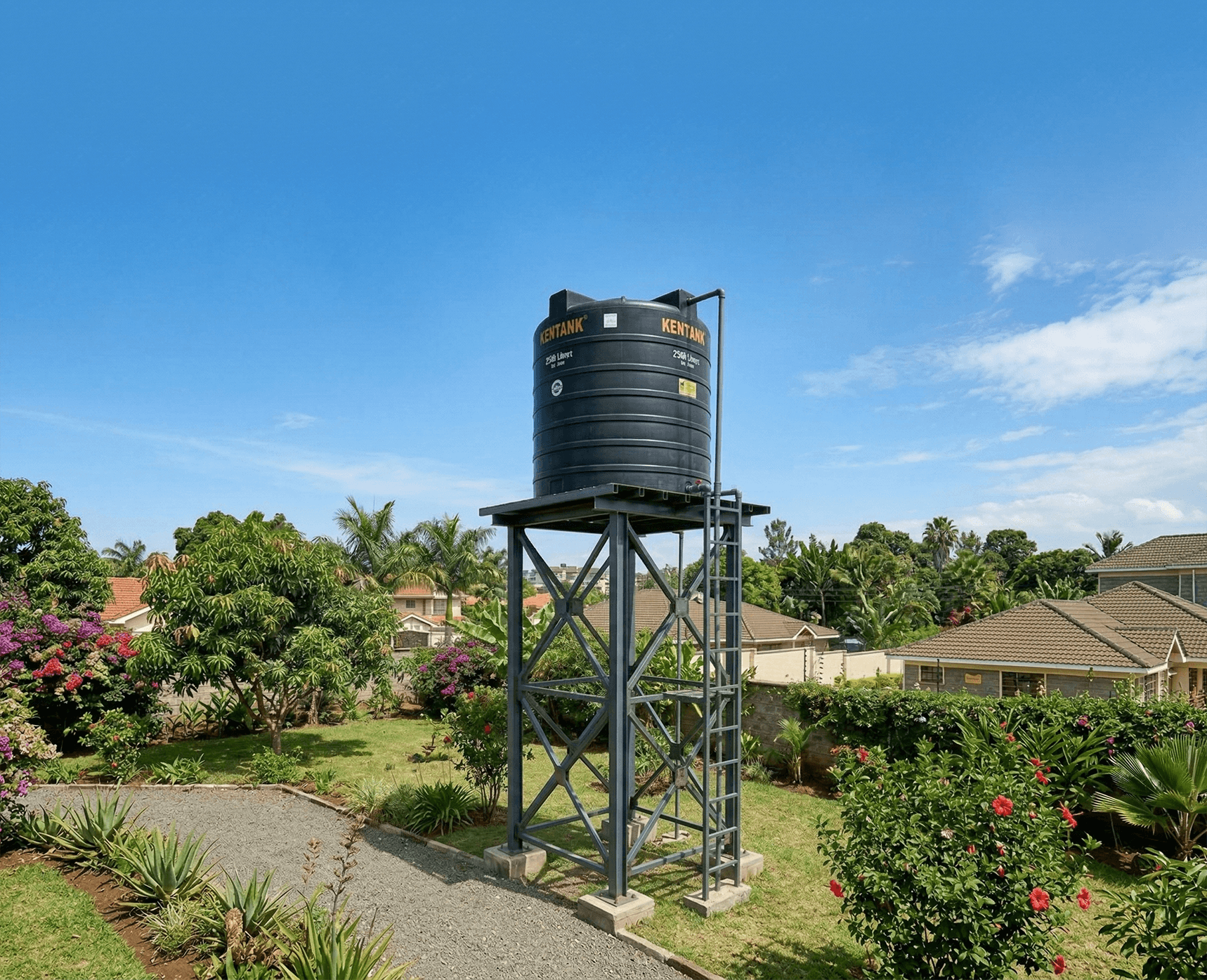
Building a Strong Foundation: Choosing the Right Water Tank Stand in Kenya
Water tanks are indispensable in Kenya, especially given our often unpredictable water supply. Whether you’re a homeowner looking to ensure a steady supply for your family or a business needing uninterrupted operations, a water tank is a smart investment. But what about what goes *underneath* it? The water tank stand or base is as critical as the tank itself. A poorly chosen or installed stand can lead to instability, damage, and even catastrophic failure. In this guide, we’ll walk you through everything you need to know about selecting the right water tank stand in Kenya, ensuring your water storage is safe, secure, and long-lasting.
Why is the Tank Stand So Important?
Think about it: a 1,000-litre water tank filled with water weighs approximately 1,000 kilograms (1 tonne), plus the weight of the tank itself. Larger tanks, like a 5,000-litre unit, can weigh over 5,000 kg when full! This immense weight needs to be supported safely and evenly. A proper stand does more than just elevate the tank; it:
- Provides a stable, level surface: Prevents the tank from tilting, which can stress its structure and lead to leaks or bursting.
- Distributes weight evenly: Spreads the load across the ground or structure beneath, preventing subsidence or damage to foundations.
- Facilitates gravity feed: Elevating the tank allows water to flow out naturally via gravity, reducing reliance on pumps and saving electricity. This is especially important in areas with unreliable power supply.
- Protects the tank: Keeps the tank away from ground-level contaminants, pests, and potential physical damage.
- Aids maintenance: Makes cleaning and inspections easier and safer.
Types of Water Tank Stands and Bases in Kenya
There are several common options for supporting your water tank. The best choice depends on your budget, the size of your tank, your location, and aesthetic preferences.
1. Concrete Bases
A concrete base is arguably the most robust and durable option, especially for larger tanks. It involves pouring a solid concrete slab on a properly prepared and compacted ground surface.
- Pros: Extremely strong, stable, and long-lasting. Can be built to perfectly match the tank's footprint. Minimal maintenance required.
- Cons: Can be more expensive and time-consuming to construct. Requires professional skills for proper mixing and pouring. Not easily movable.
- When to use: Ideal for large tanks (3,000L and above), areas with soft soil, or where maximum stability is paramount. Essential for underground tank installations.
2. Steel Stands (Galvanized or Painted)
Prefabricated steel stands are a popular choice in Kenya. They are designed to hold tanks at a specific height, offering good elevation for gravity feed.
- Pros: Relatively quick to install. Available in various heights and designs. Can be cost-effective for mid-sized tanks. Provides good elevation.
- Cons: Requires regular inspection for rust, especially in humid coastal areas. May need repainting or treatment over time. Ensure it’s strong enough for the tank's full weight.
- When to use: Suitable for most domestic tanks (500L to 5,000L). Good for yards where a concrete base isn't feasible or desired.
When purchasing a steel stand, always confirm the type of steel and coating used. Galvanized steel offers better rust resistance than plain painted steel. Ensure the manufacturer has a good reputation for quality welding and structural integrity.
3. Masonry/Brick Stands
These stands are built using bricks, blocks, or stones, often cemented together. They can be constructed to a custom height and size.
- Pros: Very strong and durable if built correctly. Can be aesthetically pleasing. Good thermal mass can help regulate water temperature slightly.
- Cons: Requires skilled masonry work. Can be costly and time-consuming. Not easily modified or moved.
- When to use: Good for medium to large tanks where a permanent, sturdy structure is desired. Can be integrated into landscaping.
4. Compacted Earth/Gravel Base
For smaller tanks (e.g., 500L - 1,000L), a well-compacted base of earth or gravel might suffice, provided the ground is stable and level.
- Pros: Most cost-effective and simplest option.
- Cons: Only suitable for smaller tanks and very stable ground. May not offer sufficient elevation for gravity feed. Prone to shifting if not properly compacted.
- When to use: Small domestic tanks in areas with firm, level ground and where elevation isn't a primary concern.
Key Considerations When Choosing a Tank Stand
Selecting the right stand involves more than just picking a material. Here are the critical factors to keep in mind:
1. Load Capacity and Calculation
This is non-negotiable. The stand *must* be able to support the maximum weight of your filled tank. A general rule of thumb:
Weight (kg) = Tank Volume (L) x 1.1 (approx. density of water + tank material)
For a 2,000-litre tank:
2,000 L x 1.1 = 2,200 kg (2.2 tonnes)
Ensure the stand's manufacturer or builder explicitly states its load capacity and that it comfortably exceeds your tank's maximum weight. Always factor in potential extra weight from sediment buildup or debris.
2. Height and Gravity Feed
The primary advantage of an elevated tank is gravity feed. To achieve adequate water pressure, the bottom of the tank needs to be at least 1 meter (3 feet) above the highest point of use (e.g., a tap or showerhead). For better pressure, higher is generally better, but consider the structural integrity of the stand at greater heights.
Recommended Heights (approximate):
- 1,000L - 2,500L tanks: 1.5m to 3m high stands are common.
- 3,000L - 10,000L tanks: 2m to 5m high stands (often concrete or robust steel structures).
If gravity feed isn't feasible or sufficient, you might need a booster pump, which adds to running costs.
3. Ground Stability and Foundation
No matter how strong the stand is, it needs a solid foundation. The ground beneath must be level, stable, and capable of supporting the immense weight. For concrete or masonry bases, proper excavation, compaction of the sub-base (using hardcore and sand), and reinforcement (rebar) are essential. For steel stands, ensure the ground is firm and level, or consider a small concrete pad for the legs to rest on.
4. Tank Size and Footprint
The stand's platform must be slightly larger than the tank's base diameter or footprint to provide adequate support and prevent the tank from slipping. Ensure the stand is designed for the specific shape of your tank (e.g., cylindrical, rectangular).
5. Durability and Environment
Consider Kenya’s climate. Coastal regions are humid and prone to rust. Inland areas might experience intense sun (UV degradation) or heavy rainfall. Choose materials and finishes that can withstand these conditions. Galvanized steel, properly treated masonry, and well-poured concrete generally offer the best longevity.
6. Installation and Accessibility
How will the tank and stand be installed? Large tanks and tall stands often require specialized equipment like cranes. Ensure the installation site is accessible for construction and future maintenance. If you're opting for a steel stand, check if assembly is straightforward.
Need expert help with tank installation? Restore Services offers professional installation services across Kenya, ensuring your tank and stand are set up correctly and safely. Contact us today for a quote!
Installation Best Practices for Tank Stands
Proper installation is key to the longevity and safety of your water storage system.
- Site Preparation: Clear the area, ensure it's level, and compact the ground thoroughly. If using a concrete base, ensure proper excavation and reinforcement.
- Leveling: Use a spirit level to ensure the base or platform is perfectly level in all directions. Even a slight tilt can cause problems.
- Assembly (Steel Stands): Follow the manufacturer's instructions precisely. Ensure all bolts are tightened securely. Check that the frame is square and stable.
- Plumbing Considerations: Position the stand considering inlet, outlet, and overflow pipe locations. Ensure there's enough clearance for connections and maintenance.
- Final Inspection: Before filling the tank, double-check the stand's stability, levelness, and all connections.
When to Call the Professionals
While some aspects of tank stand setup might seem straightforward, there are times when professional help is invaluable:
- Large Tanks: Tanks over 5,000 litres require significant structural support and often specialized installation equipment.
- Unstable Ground: If your installation site has soft soil or slopes, professional assessment and foundation work are necessary.
- Complex Plumbing: Integrating the tank with your existing water system, especially for commercial use, may require a qualified plumber.
- Height Requirements: Installing very tall stands poses safety risks and requires expertise.
Restore Services provides comprehensive water tank solutions, including expert advice on the best stands, professional installation, and ongoing maintenance. Our team understands the unique challenges of water storage in Kenya and is committed to providing reliable, safe, and cost-effective solutions.
Common Questions About Water Tank Stands
Q1: Can I place my water tank directly on the ground?
Generally, no. Even small tanks need a stable, level base to prevent shifting and stress on the tank walls. Direct ground placement can also lead to contamination and damage.
Q2: How high should my water tank stand be?
This depends on your desired water pressure. A minimum height of 1 meter above the highest outlet is recommended for basic flow. For better pressure, 2-3 meters or more is often preferred for domestic use.
Q3: How often should I inspect my tank stand?
We recommend inspecting your stand at least twice a year, and also after any major storms or seismic activity. Pay close attention to signs of rust, corrosion, shifting, or damage.
Q4: Are underground tank stands a good option?
Underground tanks require specialized concrete structures and careful engineering to withstand soil pressure and prevent leaks. They are a significant undertaking and usually best left to professionals.
Conclusion
Your water tank stand is the unsung hero of your water storage system. Investing in a strong, stable, and appropriately sized stand is just as important as choosing the right tank. Whether you opt for a robust concrete base, a sturdy steel frame, or a well-built masonry structure, prioritize safety, stability, and longevity. Don't let a weak foundation compromise your water supply.
Ready to set up your water tank? Restore Services offers a wide range of high-quality water tanks and expertly installs them on secure, reliable stands across Kenya. Contact us today to discuss your water storage needs and get a free consultation!